


Phones aren't the biggest problem. The real question is: what developmental experiences do we take away from a child if they get one too early?
When we discuss phones for children, we often ask ourselves when is the right time for a first phone. Less often do we ask the more important question: what does a child gain if they don't have one too early?
The word 'without' today quickly sounds like a surrender, a ban, or a return to the past. As if we were taking something away from the child. But the question that occupies me as a psychologist and a mother for some years now is actually different. Not what a child loses if they don't have a phone, but what they gain if they don't have one too early.
I have the impression that in discussions about phones, we focus mainly on the technology itself, far less on what happens with the child's development. What experiences do we enable children in the years when the foundations of their personality are forming? And will we really allow developmental tasks that require time, effort, boredom, relationships and play to be increasingly displaced by screens?
When I reflect on these questions, I often return to developmental theories that have explained for decades how children grow and mature. This time, I chose Erik Erikson's theory of psychosocial development. Not because it's the only or necessarily the best one. In fact, I could also turn to Piaget, Bowlby, Vygotsky or modern neuroscience findings about brain development. We would reach a very similar conclusion.
For healthy development, a child primarily needs relationships, play, movement, exploration, gradual assumption of responsibility and experiences through which they learn to regulate their emotions and their behaviour. Screens do not provide additional developmental advantages. On the contrary. They often replace precisely those experiences that the child needs most.
Erikson believed that a child grows through a series of developmental challenges or conflicts that they must gradually resolve on the path to adulthood.
Although he understood development as a lifelong process, here we will focus on childhood, as it is in these years that the foundations of personality are formed.
The first developmental task begins in the first year of life. An infant faces a fundamental question: is the world a safe place and can I trust the people around me? A sense of safety is formed through parental responsiveness, touch, eye contact and the feeling that someone is there when you need them. Today, researchers increasingly warn of a phenomenon called technoference – the intrusion of technology into the relationship between parent and child. When a parent's gaze is interrupted by a screen, the child receives fewer experiences of complete presence.
Based on trust, a toddler begins to develop autonomy. They want to explore on their own, to try, to fall and get back up. This creates the feeling: 'I can do it.' This sense does not develop in front of a screen, but through trying, waiting, making mistakes and overcoming frustrations.
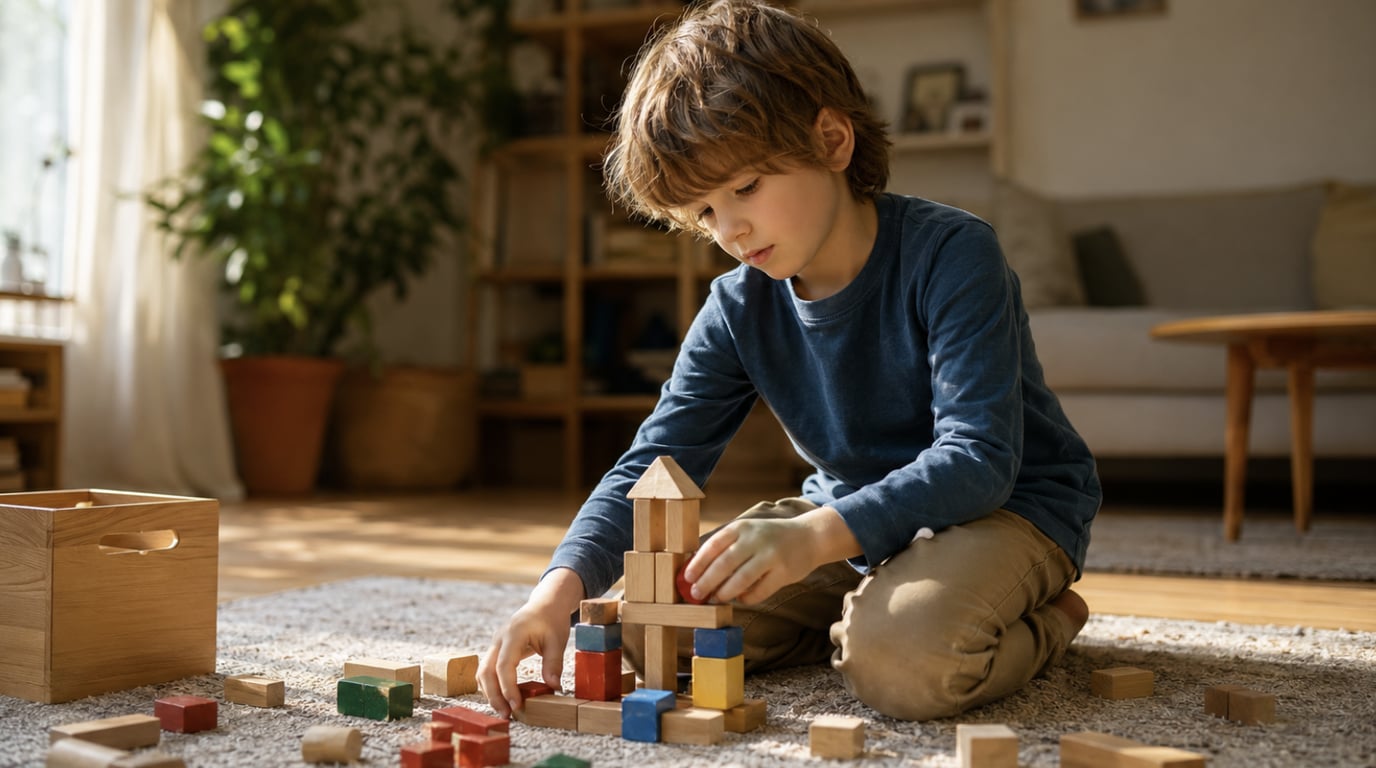
The preschool period brings another developmental task. The child begins to take initiative, to create, to plan and to test their ideas. When children build hideouts, invent stories, organise games and so on, they develop creativity, initiative and self-confidence. When today's parents were children, entertainment wasn't prepared in advance. If we wanted to play, we had to create something. In the digital age, however, the framework for play is often prepared by someone else. This difference is not just nostalgic, but developmental.
Upon entering school, the child begins to build a sense of competence. They learn different skills – riding a bike, playing an instrument, drawing, playing sports, reading and doing maths. The key task of this period is the realisation that effort brings progress. That you can do something because you practised, tried and persevered. In the digital world, many children satisfy this very need for competence. The problem is not just that it often involves mainly developing digital skills, but also that the digital environment offers quick rewards and immediate gratification.
With this reflection, it becomes clear that the problem with screens is not mainly their content, but the fact that they often represent a shortcut past developmental tasks. Instead of experiences through which a child grows, they offer quick satisfaction and immediate escape from unpleasant feelings.
Childhood without a phone is not a punishment. It is not a return to the past. It is not a rejection of technology. It is a conscious decision to give a child, in the most important years of development, the experiences that development requires from them.
Perhaps the greatest challenge of modern parenting is precisely this – to dare to wait. To not let ourselves be convinced that a child must get a phone as soon as their peers have one. More and more parents are thinking this way today.
Even initiatives like Počakajmo.si (Let's Wait.si), which we at Logout are happy to support, show that parents are not alone in this and that they are aware that perhaps the greatest gift they can give a child is precisely time. Time for a child to be a child.
##