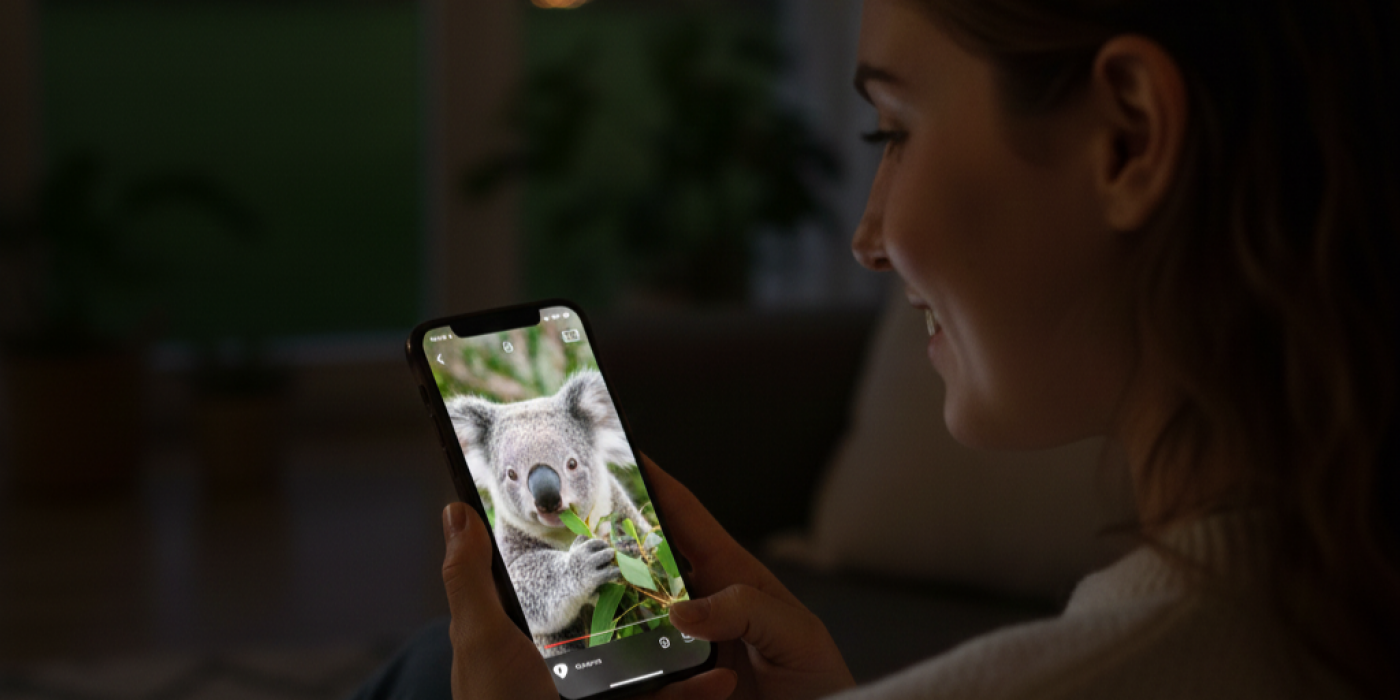
"I’ll just quickly check the weather for today." Thirty minutes later, I’m watching videos about Australian koalas, slime-making tutorials, or ASMR from hairdressers. I still don’t know tomorrow’s weather, and meanwhile, my friend has already texted me. What’s really happening here? Why do I have such weak willpower that I can’t use my phone with focus? Is this already a sign of digital addiction?
Not necessarily. When you turn on your phone, you turn on a device that is... wait, what was I saying? Oh no, I got lost in a video again. This time, someone’s building pools in the jungle. Fascinating. What was I talking about? Right! When you turn on your phone, you’re turning on a device designed to keep you engaged for as long as possible.
The Attention Economy
We’ve already written about the attention economy. Essentially, the world’s most successful platforms – Facebook, Instagram, TikTok, YouTube – are all “free” today. Free emails, free videos, free messages. But when so much of a service is free, it’s worth recalling the old saying: “If you’re not paying for the product, you are the product.”
In the digital age, the most valuable resource has become human attention. Platforms no longer sell their apps directly – they sell access to our time. The more hours we spend on them, the more ads they can show us, the more data they can gather, and the more money they make. To achieve this, they build in mechanisms designed to make it increasingly difficult for us to put our phones down.

Mobile Apps – A Perfect Labyrinth with Perfect Traps
Nothing you see on your screen is there by accident. Every element is carefully designed to grab and hold your attention. Let’s look at some of the most common ways apps ensure we spend more time on them than we intended.
Infinite Scroll
Almost all major social media platforms now offer endless streams of short videos. Watching these clips is like having a meal with no breaks. Imagine a plate that refills itself automatically, and your stomach is always hungry. Even if you’re full, you barely notice because the next delicious bite is already waiting.
Social media works the same way. By removing the “bottom of the page,” platforms removed the natural pause that allowed us to consciously decide: “Do I want to keep going?” Each swipe is another chance at something good.
"Once I scrolled all the way to the end of TikTok… then realized my Wi-Fi had disconnected." – Workshop participant
Variable Rewards and Dopamine
The “pull-down-to-refresh” gesture is like pulling a slot machine lever. You never know what you’ll get. Sometimes nothing, sometimes a terrifying geopolitical video, sometimes a hilarious comedian’s clip. This unpredictability is appealing to our brains, because each pull might lead to a reward. The system is designed to give rewards gradually, so they never get boring – just like gambling addiction develops over time.
"Only those who quit lose money. Someone always wins, why wouldn’t it be me?" – Young online betting user
FOMO and Disappearing Content
Fear of Missing Out (FOMO) is a strong anxiety that something exciting is happening elsewhere and we’re not part of it. Platforms exploit this fear with features like “Stories” that disappear after 24 hours. E-commerce sites do the same with countdown timers: “Buy now or miss out later. What are you waiting for?”
This artificial urgency makes us check apps compulsively, multiple times a day. If I’m not reachable and connected, I’m missing out. If I miss out, I’ll lose touch and be forgotten.
"But what if someone really needs me at night? Of course I have to stay reachable." – 14-year-old girl during an introductory workshop
Gamification
Platforms borrow mechanics from video games to keep us coming back daily. An example is Snapchat’s “streaks,” which count how many consecutive days you’ve exchanged messages with a friend. The longer the streak, the bigger the number.
This number becomes like a virtual pet you need to “feed” every day with a message to keep it alive. The pressure to keep the streak going turns into a social obligation, pushing you to use the app even when you have nothing to say. Breaking a streak feels like personal failure or losing a game.
"We aren’t friends any more. We’ve been fighting for half a year, but we still keep sending streaks." – Elementary school student at a workshop

The Power of Red Notifications
That little red dot screaming at me that I have unread messages. Sometimes there’s even a number showing how many emails are waiting. The choice of bright red isn’t random – red triggers a sense of urgency. It’s incredibly hard to resist tapping it when we see it.
How to Take Back Control and Spend Less Time on Your Phone
Once we’re trapped in infinite scrolling, it’s hard to break free. The easiest way to escape the trap is to avoid stepping into it in the first place. Here are some tips to avoid falling into the digital labyrinth:
- Stop before you start: Turn off notifications for apps that take up most of your time, reducing the chance you’ll open them.
- Black-and-white is the new red: Disable visual traps by switching your phone to grayscale mode.
- YOMO is the new FOMO: Accept that it’s okay to miss out and to be unreachable sometimes. Especially at night, ensure uninterrupted sleep by turning off your phone or using airplane mode or “Do Not Disturb.”
- Put out the streak fire: Notice whether you truly enjoy an activity. Collecting streaks can become stressful, annoying, and unenjoyable. When you realize you’re doing something out of obligation rather than desire, it’s okay to stop.
*Pictures were created using Gemini Nano Banana
Share on: