


Three weeks at Rakitna
15 years of work
Digital detox
A three-week residential program at BOM Rakitna, up to age 18.
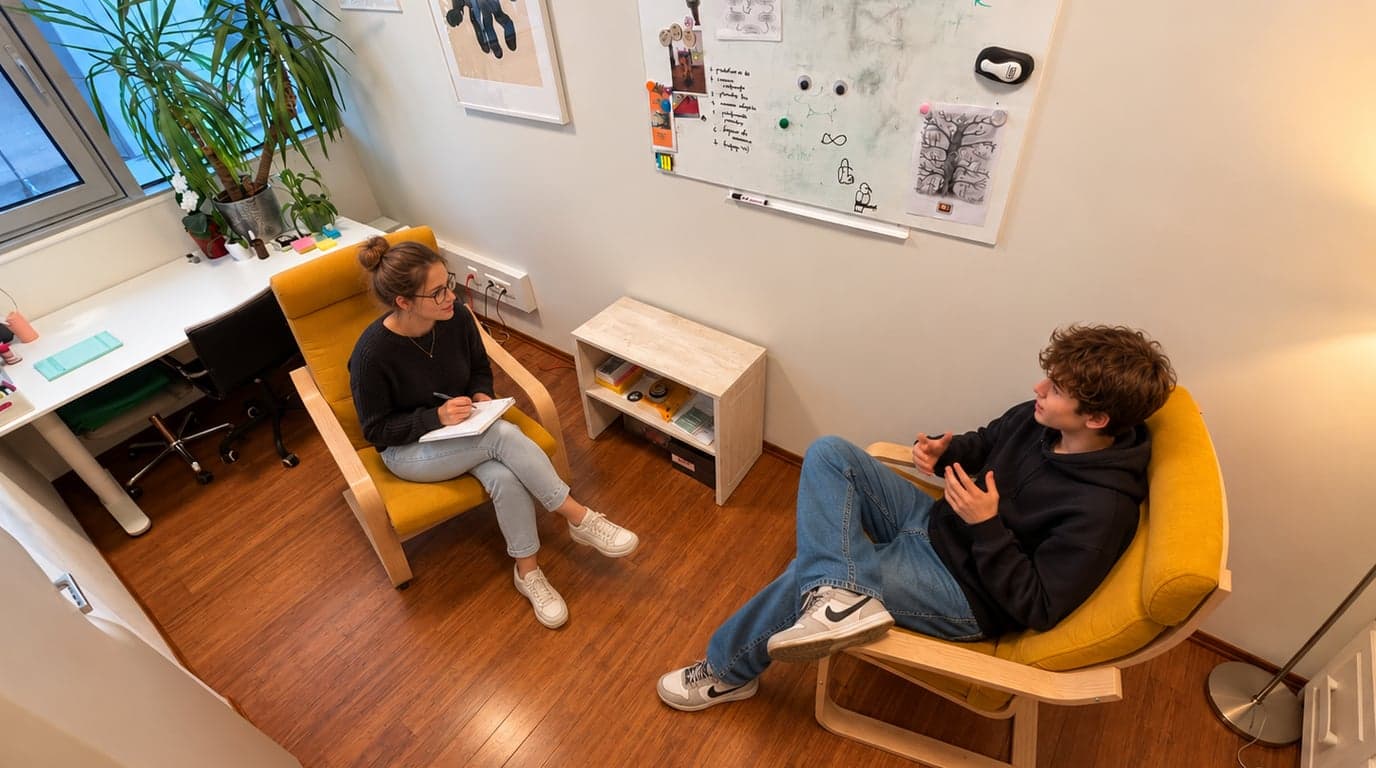
For young people up to age 18
Parent involvement is required
Free for families in Slovenia
Details
Stay, parents and follow-up — from the first talk through aftercare.
Digital detox is a three-week family programme for young people with problematic digital device use or digital addiction. It runs in partnership between Logout and BOM Rakitna.
The programme helps young people build healthier digital habits, develop social skills, grow independence and discover new ways to spend free time. Active parent involvement is required and key to lasting change.
How the programme works
1. Introductory meeting at Logout
A counsellor assesses difficulties, the young person’s motivation and suitability for the programme with the family. The family receives programme information and the young person joins the candidate list.
2. Group formation and preparation
Groups are formed by age and other characteristics, so the first available date is not always possible. A preparatory family meeting follows before the stay begins.
3. Stay at Rakitna
The young person stays at BOM Rakitna for three weeks, with a weekend at home in between. During the stay they do not use digital devices and take part in therapy groups, individual talks, sport and creative activities, animal-assisted activities and hospital school.
4. Therapeutic weekend at home
Over the second weekend the young person continues the digital detox at home. The family supports this by limiting their own device use and doing shared activities. On Sunday evening they return to Rakitna.
5. Parent involvement
Parents attend Friday meetings at Rakitna and weekly counselling at Logout. They help shape new family rules and changes at home.
6. Follow-up after the stay
Evaluation meetings at Logout follow two weeks and three months after the stay. Further counselling is available if needed.
FAQ
Who is the programme for?
Young people from age 11 up to and including 18 who show signs of problematic digital device use or addiction — for example neglecting school, sleep and social life, losing interest in other activities, hiding use, or struggling to limit screen time.
Inclusion requires consent and at least minimal motivation from the young person.
What does it cost?
The programme is covered by health insurance and is free for families.
Is parent involvement required?
Yes. Active involvement of at least one parent or guardian is required; both is preferred. Written consent from everyone with parental responsibility is also needed.
What about school?
Hospital school during the stay works with the young person’s home school so schoolwork continues with teacher support.
Do young people stay in touch with parents?
Yes. Besides Friday visits, they can briefly speak with parents each evening on a landline phone.
Does the programme run during holidays?
Most dates fall during the school year. Dates are published for each calendar year.
What results do families see?
Parents often notice better communication, more interest in social and leisure activities, a steadier sleep rhythm, and greater readiness to keep agreements about device use.
Long-term success largely depends on parental consistency and the changes the family keeps after the programme.
Can the programme be extended?
With a professional assessment and under certain conditions, the programme can be extended to six or nine weeks, or the young person can rejoin later.
About BOM Rakitna
BOM Rakitna is a public healthcare institution specialised in early support for children and adolescents at risk of developing mental health difficulties.
More information: mkz-rakitna.si


Not sure which programme is right for you or your child?
Get in touch. Together we will find a suitable form of support.